Revolutionizing Spaces with Artificial Grass Wall
Dec 29,2025
Why Architects and Designers Choose Artificial Grass Wall
Aesthetic Versatility and Biophilic Design Benefits
Fake grass walls give designers tons of creative freedom when working on projects inside buildings or outside structures. They let architects bring greenery back into cities made mostly of concrete where real plants just won't survive. What makes these artificial walls so great compared to regular vertical gardens? No need for watering systems, soil mixtures, or extra support structures. That's why many businesses install them on building sides that get little sun or in stores with dim lighting conditions. Interior designers love how the uniform texture stays looking fresh all year long, which helps merge the look of offices with surrounding landscapes. This approach supports those trendy biophilic design ideas while still keeping buildings functional and easy to maintain over time.
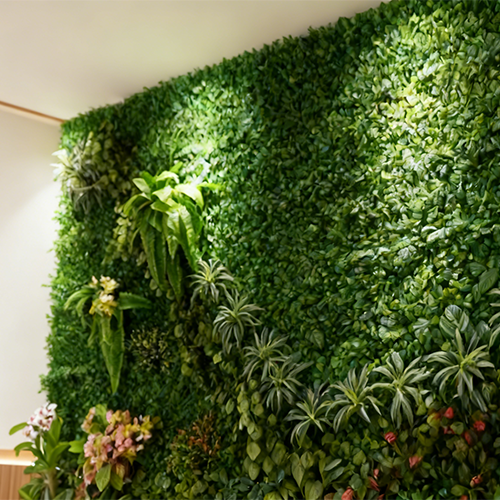
Psychological Impact: Calming Effects and Enhanced Perceived Space
Putting up fake grass walls actually helps people feel better mentally because they mimic real plants outside. These walls trigger those calming reactions our brains have when we see nature, which can really cut down on stress and make folks think clearer, especially in busy places like offices or hospitals. Studies point out that just looking at green stuff reduces stress hormones called cortisol by around 15%. And interestingly enough, these vertical gardens also trick the eye into thinking spaces are bigger than they are, sometimes making rooms look almost 30% larger. That makes them super useful in crowded city buildings where space is tight. Architects often install these grass walls to help fight off feelings of being cramped up, all while keeping every inch of floor space available for actual use instead of wasting it on traditional landscaping.
Solving Real-World Spatial Constraints with Artificial Grass Wall
Maximizing Greenery in High-Density Urban and Interior Environments
More than two thirds of people around the world live in cities according to UN Habitat data from 2023, and artificial grass walls are turning those wasted vertical spaces into something useful for the environment. These installations bring nature indoors where real plants just won't grow, like on buildings that get little sunlight, inside dark hallways, or even on tiny rooftops squeezed between buildings. Something as small as 200 square feet of this stuff takes up way less space than traditional lawns but still gives the same green look as 1,000 square feet of regular yard space. Plus it saves all the hassle of watering, cutting, and replacing grass every season. Managers of buildings in hot and wet areas have noticed their cooling bills drop by about 30% when they install these systems on walls that catch a lot of sun, according to research looking at twelve businesses located in warm coastal regions.
Case Study: Commercial Facade Retrofit in Austin, TX (420 sq ft)
A 2023 revitalization of a downtown Austin co-working space addressed severe heat gain from its west-facing concrete wall, which raised indoor temperatures by 9°F during summer afternoons. After installing UV-stabilized artificial grass panels across 420 sq ft:
- Surface temperatures dropped by 27°F
- Glare-related tenant complaints fell by 81%
- A “greenshield” buffer zone expanded usable patio space
The project achieved 100% ROI in 14 months through reduced HVAC loads and higher rental premiums. Critically, it reclaimed the ecological and spatial benefit of 3,200 sq ft of greenspace on a site measuring just 45-60 ft—demonstrating how artificial grass walls resolve microclimate challenges while maximizing efficiency in constrained built environments.
Material Science and Durability of Modern Artificial Grass Wall
UV-Stabilized Polyethylene vs. Recycled PET: Lifespan, Safety, and Sustainability
Modern artificial grass walls typically use two main types of engineered plastics these days: UV stabilized polyethylene (PE) and recycled polyethylene terephthalate (PET). The stabilized PE version actually has special additives mixed right into the material itself during production. This helps keep colors looking fresh and fibers intact for around 8 to 15 years outside, even when exposed to harsh weather changes. According to lab results, these stabilized materials fade about 30 percent slower compared to regular versions without stabilization. Plus they stay flexible no matter what kind of temperatures they face, which makes them pretty durable over time.
When old soda bottles get turned into turf fibers through recycled PET, each square meter keeps around 3 kilograms of plastic out of landfills on average. Tests have shown these materials pass the ASTM E84 Class A fire standards, plus they don't contain harmful substances like lead or other heavy metals, just like new materials do. Architects who care about green building often choose PET based systems because they cut down on carbon emissions significantly compared to traditional options. Plus, these synthetic turf solutions hold up well commercially too, lasting anywhere between seven to twelve years depending on how much foot traffic they receive day to day.
| Attribute | UV-Stabilized PE | Recycled PET |
|---|---|---|
| Outdoor Lifespan | 8–15 years | 7–12 years |
| Key Advantage | Superior fade resistance | 89% recycled content |
| Safety Compliance | ASTM E84 Class A | Lead-free, non-toxic |
| Environmental Impact | 42% lower UV degradation | Diverts 3kg plastic/m² |
Installation, Maintenance, and Long-Term ROI of Artificial Grass Wall
Getting these installations done right matters a lot if we want good structural integrity, proper seams, and consistent looks over time without problems like bulges, gaps, or weird tension spots showing up later. Proper installation with materials like UV stabilized polyethylene or certified polyester makes all the difference. These systems can handle pretty much any weather thrown at them and still look great for seven years or more in places like shopping centers and office buildings. What's really nice about this stuff? Maintenance basically means giving it a quick brush once a month and maybe a rinse now and then. No need to spend money on water bills, fertilizer, pest control products, or constant trimming. Most businesses find they spend about 90 percent less on maintenance compared to real plants. For companies located in dry areas where water costs are high, just saving on irrigation can cut expenses by over six hundred dollars each year. Looking at different industries from offices to hotels, the mix of attracting tenants, making better use of space, and maintaining that fresh appearance pays off pretty quickly too. Typically, most businesses see their investment start to make sense somewhere between three to five years after installation.